
Somewhere along the way, protein became the main character of every nutrition label. Packaging shouts its gram counts, menus advertise it, and whole product lines are built around delivering more of it. None of that is wrong exactly. But it has made the conversation about eating well oddly one-dimensional, and it has pushed a quieter, more practical marker of a complete diet to the margins: fiber.
The most complete plates share one trait
Look past the marketing and the healthiest ways of eating have something in common that has nothing to do with protein powder. They are built on plants: fruit, vegetables, legumes, whole grains, nuts and seeds. Fiber is simply what those foods carry along. It is not a supplement story or a biohacking trend. It is the nutritional fingerprint of a diet that includes a genuine variety of whole plant foods.
This is worth saying plainly because the current conversation rewards a strange pattern: people carefully add protein to everything while their plates stay beige. The chicken-and-rice meal-prep container has protein covered and almost nothing else. A protein bar is a candy bar wearing a gym membership. If the question is “did I get enough protein today,” plenty of modern diets can answer yes while delivering very little of what plants provide.
Fiber reframes the question. Ask instead whether the day contained fruit, vegetables, legumes, whole grains, nuts or seeds, and fiber mostly takes care of itself.
Add, don’t obsess
The reason fiber works better as a habit than as a headline is that it asks for addition, not restriction. Nobody has to give anything up. The move is to notice where plants could join the meals that already exist.
Breakfast. Oats already carry fiber; the upgrade is what goes on top. Berries, sliced banana, a spoonful of ground flaxseed or chia, a handful of walnuts. A plain bowl becomes a varied one in about ninety seconds, and the same logic applies to yogurt, toast with peanut butter, even eggs. A side of fruit counts.
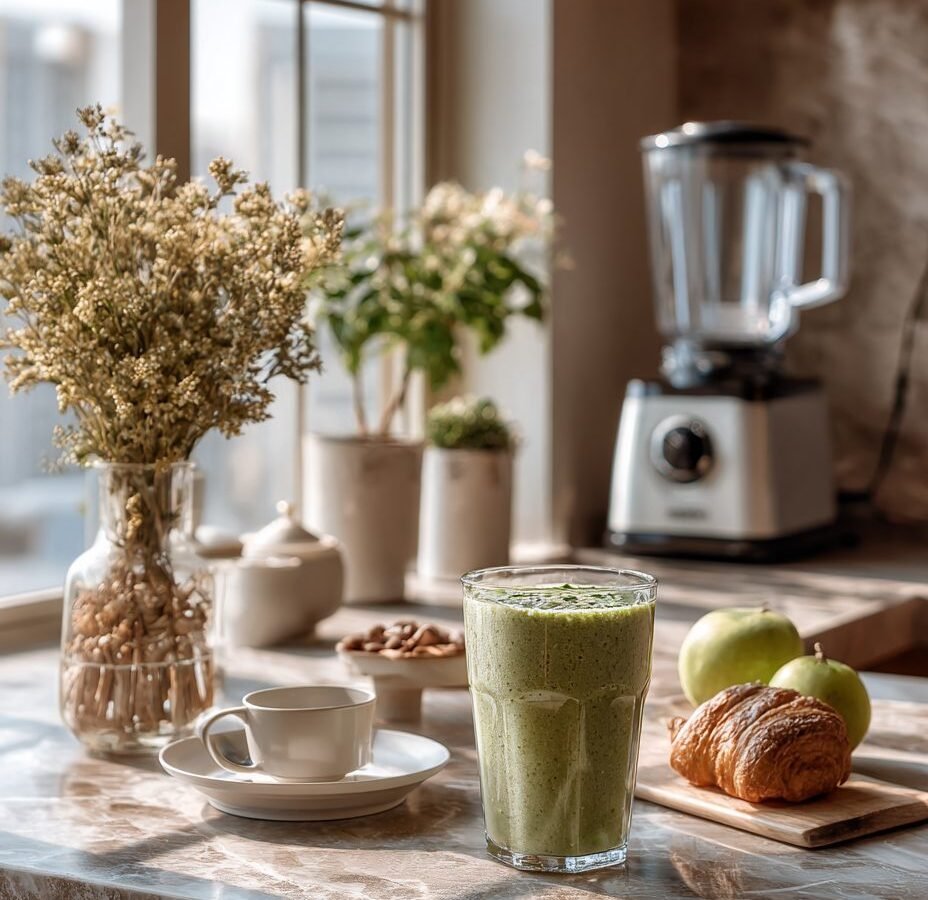
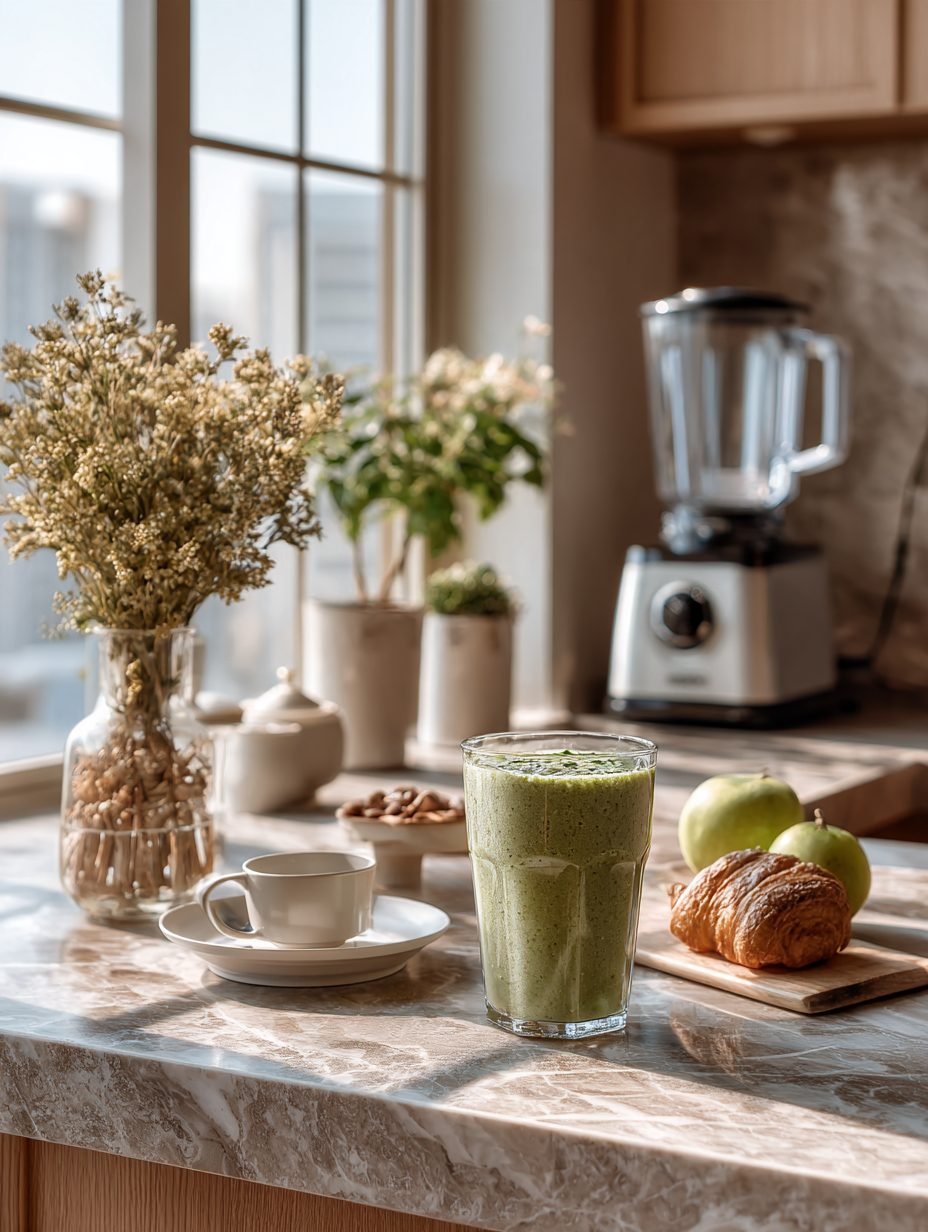
Smoothies. This is the easiest win in the kitchen. A smoothie built on fruit, a handful of greens, and a spoonful of nut butter or seeds is fiber doing its best work: invisible, fast, and hard to mess up. Frozen berries work as well as fresh, which removes the freshness-pressure excuse.
Lunch. The grain-bowl formula exists for a reason. A whole grain base, a legume, a few vegetables, something green, a dressing with actual flavor. Chickpeas on a salad, lentils in a soup, black beans in a wrap. The legume is usually the single biggest addition, and most lunches are one legume away from a meaningfully more complete plate.
Dinner. This is where whole grains earn their place. Brown rice, quinoa, farro, or whole-grain pasta alongside roasted vegetables. The vegetables do not need to be elaborate: roasted carrots, broccoli, or a big salad all count. The pattern is a plate that has more than one texture and more than one color.
The plate test
Forget tracking for a moment. There is a simpler diagnostic, and it is visual: look at the plate. Does it have color from more than one plant? More than one texture? Something that grew in the ground and something that grew on a plant? A plate that passes this test almost certainly carries fiber. A plate that fails it (beige, uniform, single-textured) probably does not, no matter what the label claimed about protein.
Public-health guidance has long suggested adults eat considerably more fiber than typical modern diets provide. That gap is not a call for precision or anxiety; it is a nudge toward the produce section and the bean aisle. Food first, as ever.
A habit, not a headline
Protein will keep its spotlight, and it deserves some of it. But fiber may be the better habit to watch, precisely because it cannot be faked with a fortified bar. It only shows up when the diet itself is varied, plant-rich, and built from actual food. Add the berries. Throw the lentils in the soup. Make the smoothie a daily thing. The headline nutrient got the marketing budget; the quiet one might change the way we eat.
A protein bar is a candy bar wearing a gym membership.
